

Lacquer on wood paintings: Techniques, craftsmanship, and timeless artistry
Lacquer on wood paintings represent a pinnacle of Vietnamese traditional artistry, requiring extraordinary patience and meticulous craftsmanship. By skillfully combining natural wooden panels with precious materials, this genre of painting achieves a unique, lustrous finish and remarkable visual depth. The complex creation process endows each piece with enduring durability and exceptional aesthetic appeal.
What is lacquer on wood painting?
A lacquer on wood painting is crafted on a thoroughly prepared wooden panel, traditionally coated with natural lacquer and other classic materials. The artist builds up the image with multiple layers of color, incorporating gold leaf, silver leaf, eggshell, or mother-of-pearl. The surface is then polished and abraded to reveal the interplay of materials below, guided by the artist’s vision.
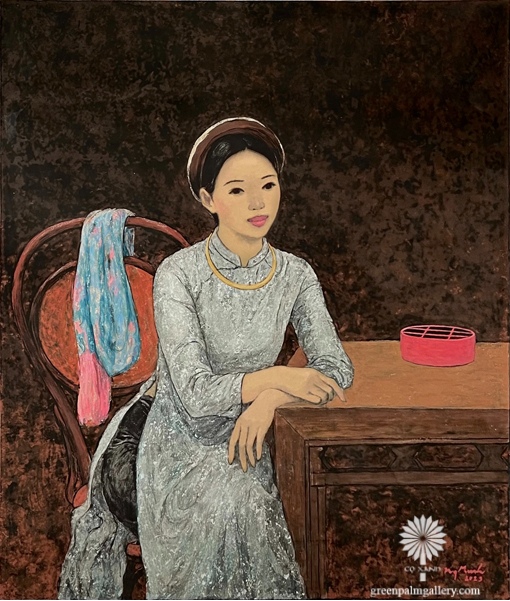 Lacquer on wood paintings distinguish themselves with their deep gloss and enduring artistic value.
Unlike oil or acrylic paintings, lacquer paintings works possess an optical depth created by multiple overlapping layers of lacquer. The way light reflects through these layers gives each painting a dynamic, ever-changing beauty that enhances its elegance, sophistication, and timelessness.
The structure of a lacquer on wood painting
A finished lacquer on wood painting is the result of many tightly bonded layers of materials.
The wooden foundation
The wooden panel provides the essential basis for lasting durability. Artists commonly select stable types of wood such as dổi, xoan đào, or lim to minimize warping and insect damage. After surface preparation, the panel is covered with gauze and repeatedly coated with primer lacquer to achieve a smooth, resilient foundation that adapts well to environmental changes.
Lacquer layers and traditional materials
Image-making is carried out using natural Vietnamese lacquer mixed with colored pigments. Depending on their creative intentions, artists may add touches of gold leaf, silver leaf, eggshell, or mother-of-pearl inlays, along with other natural materials, to create a rich array of optical effects. The interplay of muted lacquer tones, shimmering metallics, and organic textures imparts the painting with striking depth and a sense of refinement and artistry.
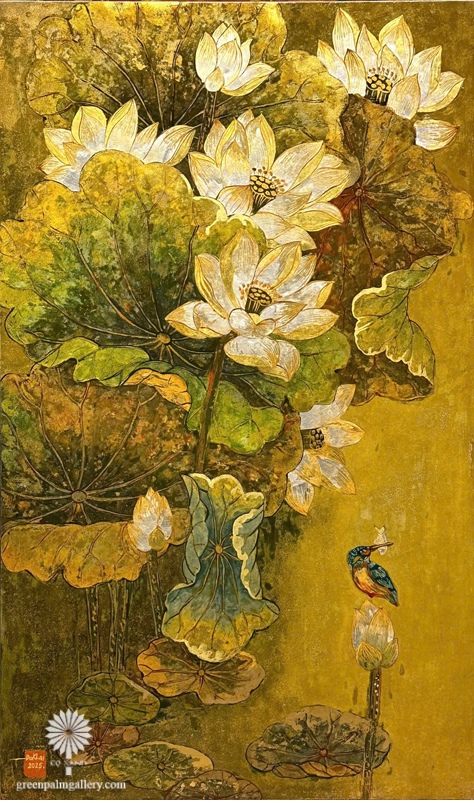 A stable wooden base is crucial to the lasting quality of lacquer paintings.
Protective coating and finishing
Once the colored layers are complete, the painting surface is sealed with a protective lacquer and placed in a carefully controlled humidity room to allow the lacquer to cure naturally. Polishing and hand-burnishing gradually reveal layers of color, metallic elements, and intricately designed lines, resulting in a flawlessly smooth surface and the unmistakable sheen characteristic of traditional lacquer on wood art.
The process of creating lacquer on wood paintings
Crafting a lacquer painting can take several months, involving these main steps:
- Preparing the panel: Treating the wood, covering it with fabric, and applying multiple coats of primer to form a sturdy base.
- Sketching: Drafting the composition and imagery according to the artist’s intentions.
- Creating the image: Building up colored layers, applying gold/silver leaf, or inlaying eggshells and mother-of-pearl details.
- Lacquer curing: Placing the piece in a controlled environment to allow natural lacquer to harden.
- Wet sanding: Carefully abrading each layer with water to gradually reveal details and colors.
- Final polishing: Perfecting the surface for a deep shine and enhancing the work’s visual impact.
Each step demands expert knowledge, precision, and exceptional patience. Even a minor error during sanding or lacquer painting processing can compromise the entire artwork.
Highlights from Green Palm Gallery’s lacquer on wood collection
Green Palm Gallery offers an extensive collection of lacquer on wood paintings covering a variety of themes. Each work is hand-selected, suitable for collectors, interior decoration, or thoughtful artistic gifts.
Red River - Bui Huu Hung
The lacquer painting “Red River” by Bui Huu Hung, measuring 122 × 122 cm, depicts the peaceful riverside countryside in a signature style. The piece is notable for its vibrant crimson tones, harmoniously blended with distressed patches of silver leaf and a gold-gilded boat as visual accents. Layered bamboo groves and ancient Han script add depth to the composition, evoking the tranquil beauty and rich culture of northern Vietnam’s river landscapes.
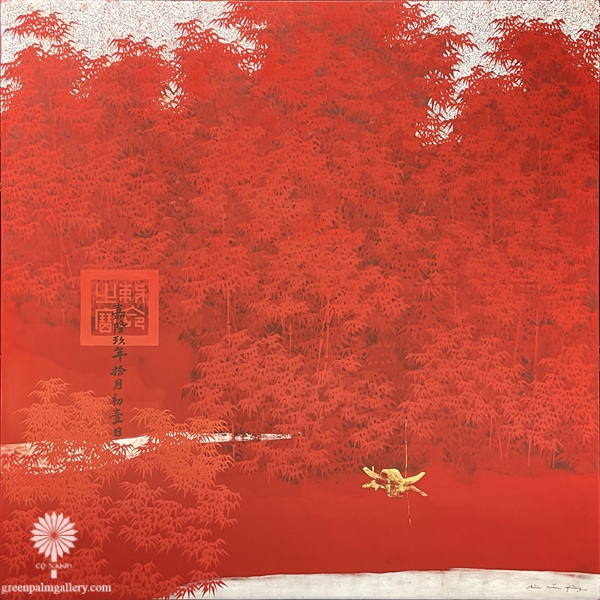 “Red River” captures the serene beauty of the Vietnamese northern delta.
Tranquil Moment - Nguyen Thanh Chuong
“Tranquil Moment" by Nguyen Thanh Chuong, 100 × 100 cm, features an abstract cubist style with elements inspired by Vietnamese folk art. A striking green background, interwoven with vivid reds, blues, oranges, and gold leaf accents, forms a bright and harmonious palette. Human figures are subtly integrated into the rural scene via balanced geometric composition, expressing the simple, peaceful rhythms of Vietnamese village life.
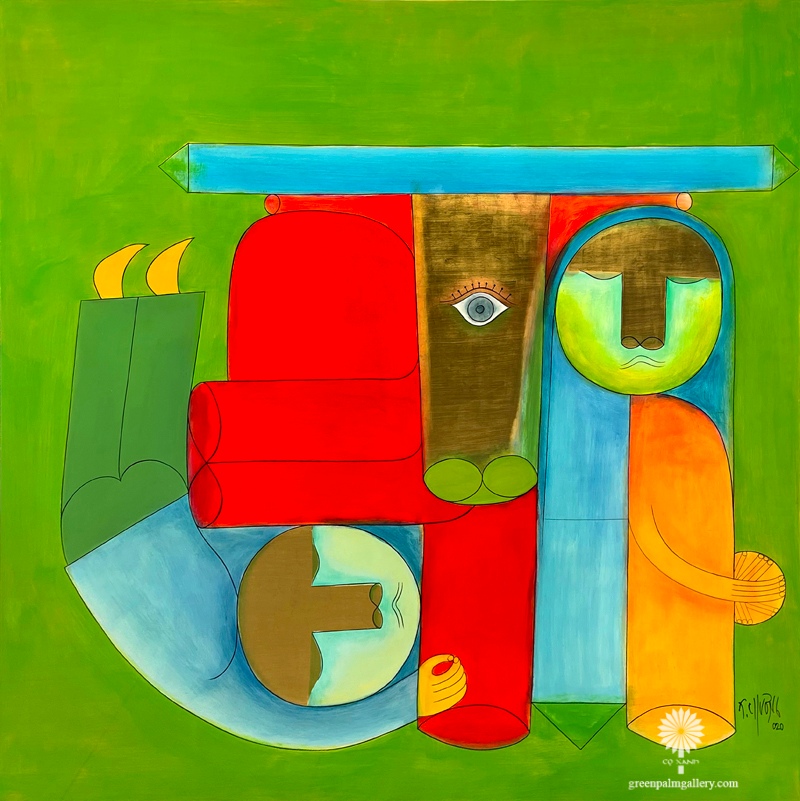 Nguyen Thanh Chuong’s stylized cubism creates a distinctive artistic language.
Seasonal Changing - Pham Hong Son
The lacquer work “Seasonal Changing” by Pham Hong Son, 120 × 70 cm, poetically captures the shifting atmosphere before a summer rain. Olive greens dominate the landscape, highlighting a cluster of dragonflies whose wings are inlaid with shimmering mother-of-pearl, gold, and silver leaf against the water’s surface. Their graceful movement among lotus pods conveys both tranquility and liveliness - the spirit of rural northern Vietnam.
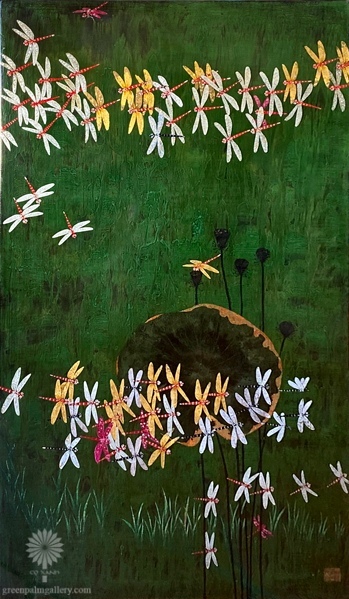 “Seasonal Changing” recreates the vibrant transitions of nature before the season’s first rains.
Tonkin Lady - Vu Quoc Dung
“Tonkin Lady” by Vu Quoc Dung, on a 122 × 122 cm square panel, portrays the graceful refinement of a Hanoi woman in a nostalgic setting. Warm earth tones, rich reds, and gilded gold create a sense of timeless elegance typical of traditional lacquer art. The image of a poised young woman in a traditional conical hat takes center stage, harmonized with lotus leaves and blossoms, forming a balanced and evocative composition. Her understated, dignified presence reflects the refined culture and heritage of ancient Hanoi.
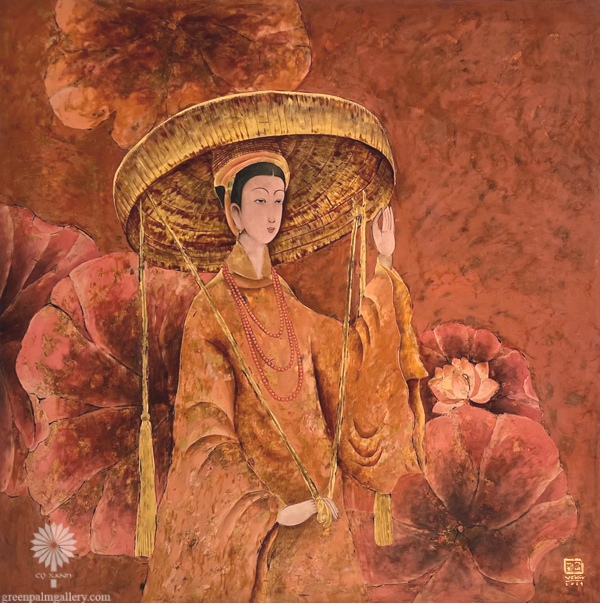 “Tonkin Lady” embodies the sophisticated elegance of Hanoi women from a bygone era.
Lacquer on wood painting is a harmonious blend of traditional cultural values and masterful technique. With its lasting beauty and intricate craftsmanship, each work elevates your living space and becomes a cherished legacy for generations. Explore the collection at Green Palm Gallery to fully appreciate the timeless appeal of Vietnamese lacquer art and select a piece that matches your personal style.
|
GREEN PALM GALLERY Gallery in Ha Noi: 39 Hang Gai, Ha Noi, Viet Nam
Gallery in HCM City: 49 Mac Thi Buoi, HCM City, Viet Nam
|