

Discover the traditional Vietnamese lacquer painting process
The lacquer painting process is the foundation that underpins the value of every artwork. Behind the glossy surface and profound colors lies a meticulous journey of craftsmanship - building the core, applying layers of lacquer, inlaying materials, and painstakingly polishing each layer. Every coat must be left to dry naturally before the process moves forward, meaning the creation of a single lacquer painting can span several months. It is the artist’s patience and refined technique that lend lacquer works their lasting beauty.
Introduction to lacquer painting and its artistic significance
Lacquer painting is one of the most distinctive mediums in Vietnamese fine art, utilizing native lacquer resin (“son ta”) along with gold leaf, silver leaf, eggshell, mother-of-pearl, and other traditional materials. Unlike many other painting forms, lacquer art from Viet Nam is completed through the gradual buildup and polishing of multiple layers, revealing the imagery step by step. This technique creates a deep, lustrous surface with unique color effects.
Originating from time-honored lacquer crafts, the medium was embraced by Vietnamese artists in the early 20th century and soon established itself as a stand-alone art form. Today, lacquer paintings continue to be highly regarded for their intricate techniques, timeless artistic value, and the harmonious blend of artistry and meticulous craftsmanship.
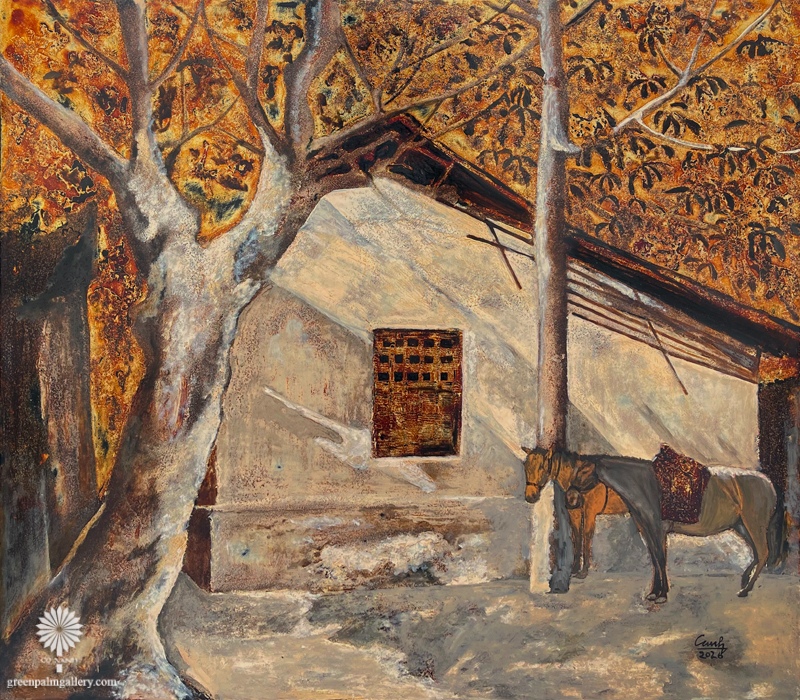
Lacquer painting process - An intricate handcrafted process
Every lacquer painting comes to life through a series of sophisticated manual stages that demand precision at every step, ensuring the desired color depth and surface finish.
Preparation of tools and materials
The preparation of tools and materials is crucial to the lacquer painting process, as each element plays a role in the durability, finish, and color richness of the artwork.
Essential tools include:
- Lacquer brushes
- Clay spreaders and palette knives
- Fine art brushes in various sizes
- Sandpaper and polishing stones
- Smooth charcoal powder and the palm for buffing
Key materials:
- Natural lacquer resin (raw, refined, and adhesive lacquer)
- Core boards made from vông or dói wood
- Fine clay and adhesive lacquer to build the core
- Gold leaf, silver leaf, eggshell, and mother-of-pearl fragments
- Natural pigments for unique colors and effects
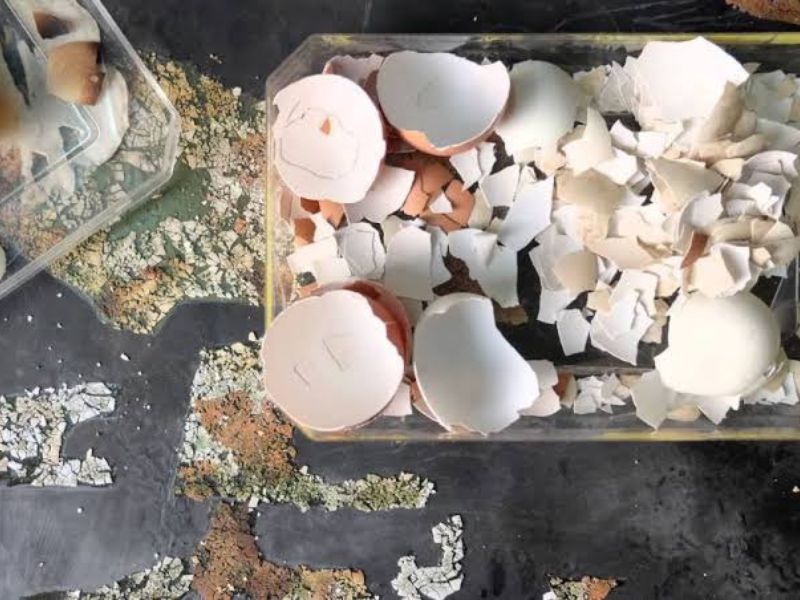 Eggshell and mother-of-pearl are inlaid to create signature surface textures unique to lacquer paintings.
Step-by-step traditional lacquer painting process
To complete a lacquer painting, artists must dedicate months to carefully executing each step of the process.
Creating the core (“voc”)
The journey begins with crafting the core - essential for the painting’s durability and quality. Linen is first layered on wooden boards, then coated with multiple rounds of fine clay and lacquer resin. After each coat, the board is naturally dried and smoothed. When the foundation is glass-flat, hard, and stable, it is ready for the artistry to begin.
Sketching the composition
Once the core is ready, the artist sketches the composition and major details. This initial drawing helps precisely position color areas, gold or silver leaf, and inlay materials - ensuring harmony and coherence throughout the creative process.
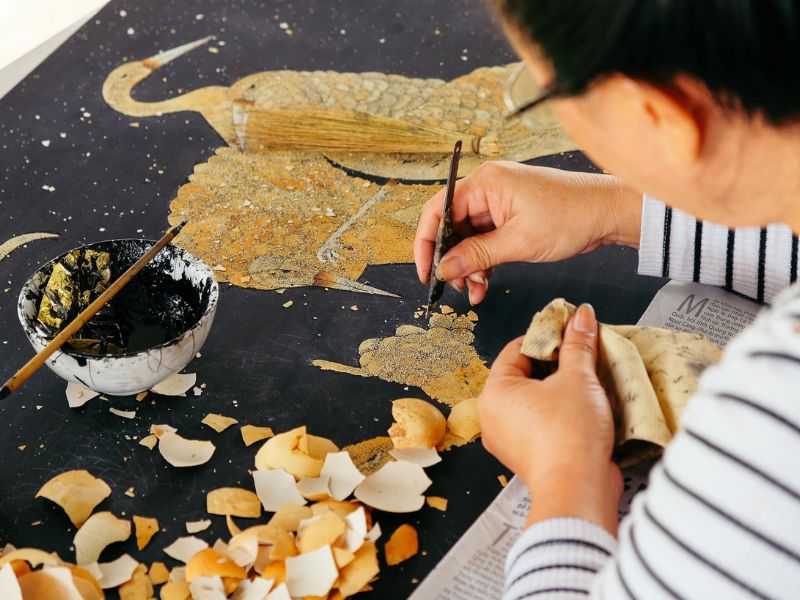 Inlaying special materials
Creating depth and signature effects, the artist inlays eggshell, mother-of-pearl, gold, or silver leaf into designated areas. Several layers of lacquer are then applied to lock these materials in place and set the stage for color work.
Applying colors and artistic effects
Multiple layers of lacquer alternate with colored pigments, allowing the artist’s vision to unfold layer by layer. Each layer must dry naturally, which means coloring and layering can take days or weeks. This method is what imparts lacquer painting with its signature color depth and luminosity.
Sanding, polishing, and finishing
After the final lacquer layers are fully cured, the surface is delicately sanded with water and fine-grade sandpaper. This gradual sanding process reveals the underlying composition, materials, and colors. The last step is buffing with fine charcoal or specialized materials, creating a deep and polished finish ready for display.
Notes on the lacquer painting process
Given the lacquer painting process requires multiple lengthy steps, perfect technique at each stage is paramount. Even minor mistakes can affect the artwork’s surface, color, or longevity.
Drying time between stages
- Each lacquer layer must be fully dried before the next step.
- Drying times typically range from 24 to 48 hours or longer, depending on weather and lacquer type.
- New lacquer should never be applied over an unset layer to avoid cracking, blistering, or peeling.
Dealing with common errors
- Wrinkling or peeling occurs from overly thick layers or insufficient drying time.
- Bubbles or pinholes may result from impurities or improper application.
- Over-polishing may remove colored layers, altering the composition and intended effects.
- Warping or cracking often stems from improper preparation or storage of wood and core.
- Inlays may detach if not properly fixed before subsequent lacquer applications.
- Uneven coloring can occur if mixing ratios are inconsistent or layers are insufficiently dried.
- Dust or debris during lacquer application or polishing can detract from the painting’s finish.
Proper material storage and usage
- Wear gloves when handling lacquer resin to prevent skin irritation.
- Store lacquer, gold leaf, silver leaf, and inlay materials in a cool, dry place away from sunlight.
- Maintain a clean, ventilated workspace while mixing, polishing, and handling materials.
Frequently asked questions about lacquer paintings and their creation
Why does the lacquer painting process take so long?
Each work requires foundational building, multiple rounds of lacquering, inlays, sanding, and hand polishing. Crucially, every lacquer layer must dry naturally before continuing, which can stretch production time from several months to nearly a year.
What accounts for the durability of lacquer art?
Lacquer painting’s resilience comes from the quality of the resin, the preparation of the core, and meticulous craftsmanship. If executed properly and preserved in suitable environments, lacquer paintings can maintain their brilliance and form for decades.
Why are lacquer paintings so valuable?
Value in lacquer art is derived from the painstaking creative process - from preparing the core, handling materials, to final polishing. The extended realization period, traditional materials, and skillful manual work imbue each piece with its unique worth.
Understanding the lacquer painting process allows viewers to appreciate the artistry behind every finished piece. From the preparation of the foundation to the final polish, each step reflects the artist’s expertise and dedication.
At Green Palm Gallery, you can discover and collect stunning lacquer paintings by Vietnamese artists. Every artwork is a window into the enduring beauty of traditional Vietnamese lacquer and the skillful hands that bring it to life.
|
GREEN PALM GALLERY Gallery in Ha Noi: 39 Hang Gai, Ha Noi, Viet Nam
Gallery in HCM City: 49 Mac Thi Buoi, HCM City, Viet Nam
|