

Abstract oil painting: The vibrant colors of creative thinking
Abstract oil painting offers a fresh perspective on art by blending color, line, and shape, rather than depicting images in the traditional manner. Each artwork acts as an expression of the artist’s emotions, thoughts, and unique creative vision. With its distinct aesthetic value and ability to create a striking focal point, this genre is increasingly favored in both art collections and stylish living spaces.
Understanding abstract oil painting
Abstract oil painting employs oil as its medium to portray ideas, emotions, or creative thinking through the interplay of color, lines, and composition. Instead of replicating reality, these works are built from fundamental elements that spark viewers’ imagination and individual interpretation. Key characteristics of abstract oil painting include:
- Avoidance of direct representation of people or objects
- A strong emphasis on color, line, form, and surface texture to achieve visual impact
- Each work is open to diverse interpretations and is not restricted to a single meaning
- Clear expression of the artist’s creativity, emotion, and personal style
How abstract oil painting differs from other oil painting genres
Although abstract and traditional oil paintings share the same medium, their approach and purpose diverge significantly. The differences are evident in subject matter, visual language, and the viewer’s interaction with the artwork.
|
Criteria |
Abstract oil painting |
Other oil painting genres (Realism, Landscape, Still Life) |
|
Subject |
Color, lines, shapes, surface textures |
People, natural scenes, real-life objects |
|
Composition & Form |
Unrestricted, ignores realistic proportions |
Follows rules of perspective, proportion, and lighting |
|
Visual experience |
Encourages personal interpretation and subjective perception |
Immediate recognition of depicted content |
|
Brushwork technique |
Emphasis on expressive strokes, layering, impasto, raised texture |
Meticulous depiction of object surfaces and fine detail |
The significance of abstract painting in art and modern life
Abstract oil painting stretches the boundaries of artistic expression, allowing artists a freer way to communicate emotion and concept. Every piece carries its own creative mark, enriching the visual vocabulary of contemporary art.
In daily life, abstract art serves as a powerful accent in homes and workplaces. Its colors, compositions, and forms enhance aesthetic depth and inspire a range of emotions and thought for those who experience it.
Why choose abstract oil painting as an artistic highlight for your space
Abstract oil paintings are increasingly popular in interior design for their ability to set a unique tone and aesthetic identity. Their diversity in color, shape, and style provides countless options for complementing modern décor trends.
- Unique focal point: Inventive compositions and bold colors draw the eye, adding depth and visual sophistication to any room.
- Versatile display: With their flexible compositions and abstract imagery, these works fit seamlessly in living rooms, bedrooms, offices, lobbies, and more.
- Inspiring creativity: Each painting invites personal interpretation, encouraging the viewer to find their own meaning and inspiration.
- Compatible with various interior styles: Their versatility makes abstract oil paintings easy to blend with modern, minimalist, industrial, or neoclassical décor.
- Individual taste: Each work reflects the owner’s unique sense of style and artistic preference, leaving a distinct mark on the space.
Notable artistic movements in abstract oil painting
Abstract oil painting has given rise to varied movements, each with its own philosophy and technique. These styles differ in their use of color, form, and composition, contributing to the rich diversity of abstract art.
Geometric abstraction
This movement is defined by the use of basic shapes - squares, circles, triangles - combined with straight lines and bold color blocks. The compositions are meticulously arranged to create balance, order, and visual harmony. Iconic works include Composition VIII (1923) by Wassily Kandinsky and Suprematist Composition (1916) by Kazimir Malevich, exemplary for their geometric structures and color relationships.
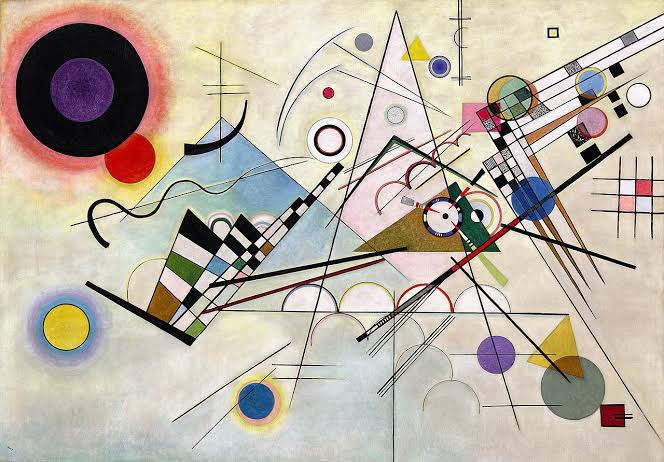
Kandinsky's Composition VIII (1923) stands out for its harmonious interplay of geometry, line, and color.
Expressive abstraction
Unlike geometric abstraction, expressive abstraction values emotion and spontaneity. Dynamic brushstrokes, color splatters, and thick impasto convey feeling rather than adhering to strict form. Jackson Pollock is a key figure in this genre, with notable works like Number 1A, 1948 and Number 7A, 1948 that embody energetic movement and layered color.
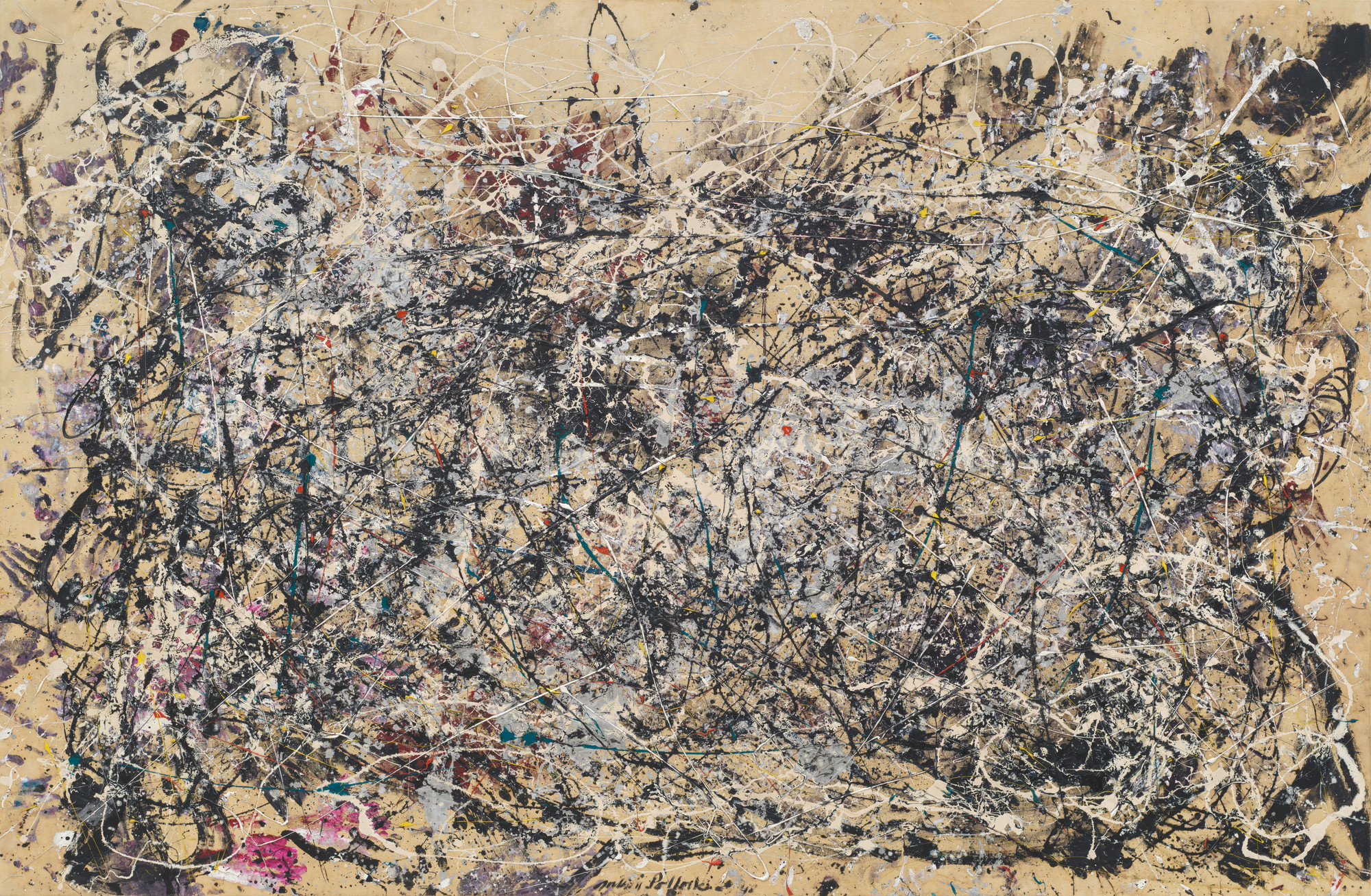
Jackson Pollock's Number 1A, 1948 features interwoven layers of paint and freely flowing, dynamic lines.
Suprematism
Suprematism pursues simplicity in form and color, stripping painting down to its essentials to distance it from literal description. Works often feature basic geometric shapes and restrained color palettes, focusing the viewer’s attention on emotional resonance and pure expression. Seminal pieces include Black Square (1915) and Suprematist Composition: White on White (1918) by Kazimir Malevich, which are cornerstones of minimalist abstraction.
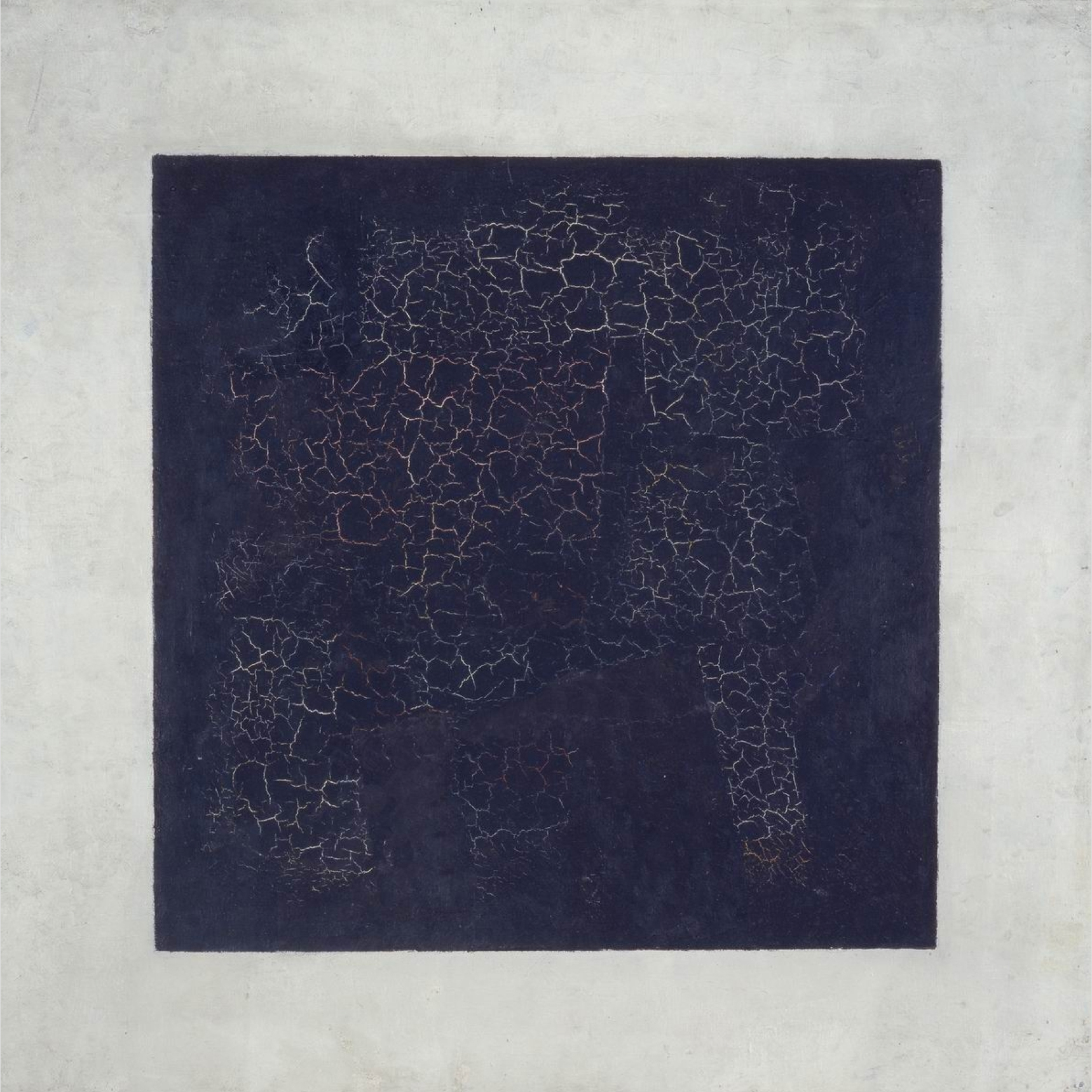
In Black Square (1915), Kazimir Malevich uses a minimalist black square as the central focus of the artwork.
Cubism
Cubism deconstructs objects into geometric facets and reassembles them on a single surface. This method presents multiple perspectives within a single image, challenging traditional ideas of form and space. Legendary cubist works include Les Demoiselles d’Avignon (1907) by Pablo Picasso and Man with a Guitar (1911–12) by Georges Braque, known for their fragmentary compositions and shifting viewpoints.
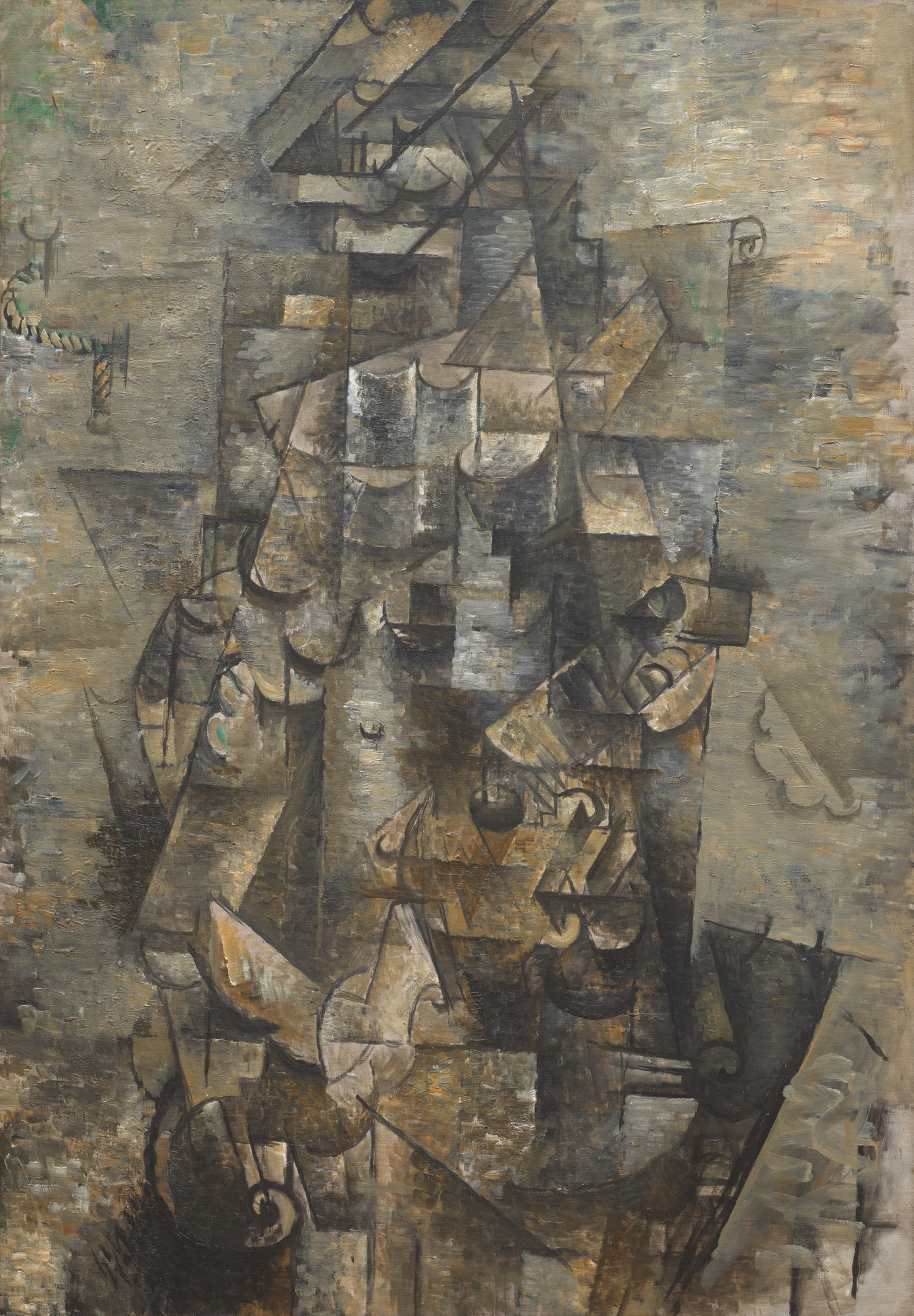
Georges Braque's Man with a Guitar breaks the image into multiple geometric planes characteristic of Cubism.
Featured abstract oil paintings at Green Palm Gallery
The abstract oil paintings showcased at Green Palm Gallery exemplify creative diversity, with each canvas reflecting an artist’s individual approach to color, form, and structure. Every piece adds a new dimension to the Gallery’s collection.
Peaceful Day – Tran Hong Duc
Measuring 100 × 120 cm, “Peaceful Day” by Tran Hong Duc is executed in oil on canvas and exemplifies geometric abstraction. Carefully placed squares, rectangles, and triangles overlay a gradient background that shifts from green to blue, producing a rhythmic, balanced composition.
The focal point emerges at the center, where thick impasto and deep brown hues intersect with dynamic lines, breaking the stability of the flat surrounding colors. The mix of cool tones and varied surface techniques creates visual depth, showcasing the creative spirit of abstract art. This painting is ideal for modern, minimalist interiors or living rooms seeking a refined artistic accent.
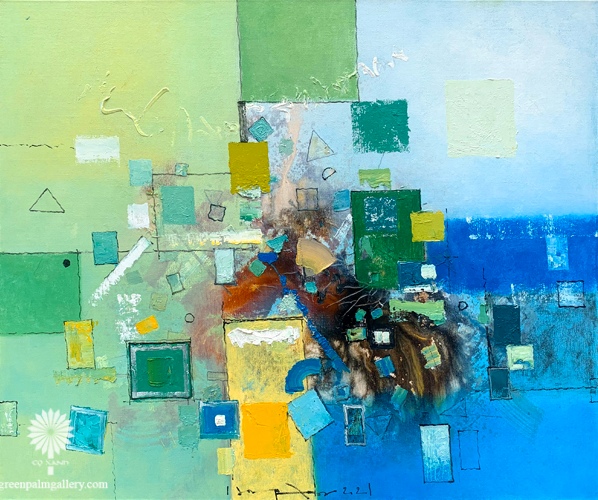
Peaceful Day by Tran Hong Duc stands out for its geometric forms and nuanced blue-green palette.
A New Day – Pham An Hai
With dimensions of 200 × 240 cm, “A New Day” by Pham An Hai uses an expressive abstract language. Bold black brushstrokes sweep across a base of grey, white, and blue, forging visual contrast and guiding the viewer’s gaze across the canvas.
Freeform overlays of paint and watercolor-like drips create a sense of depth and constant motion. Though the color scheme is restrained, varied surface techniques give the work unmistakable dynamism and mark Pham An Hai’s distinctive style, making it a striking presence in abstract oil painting.
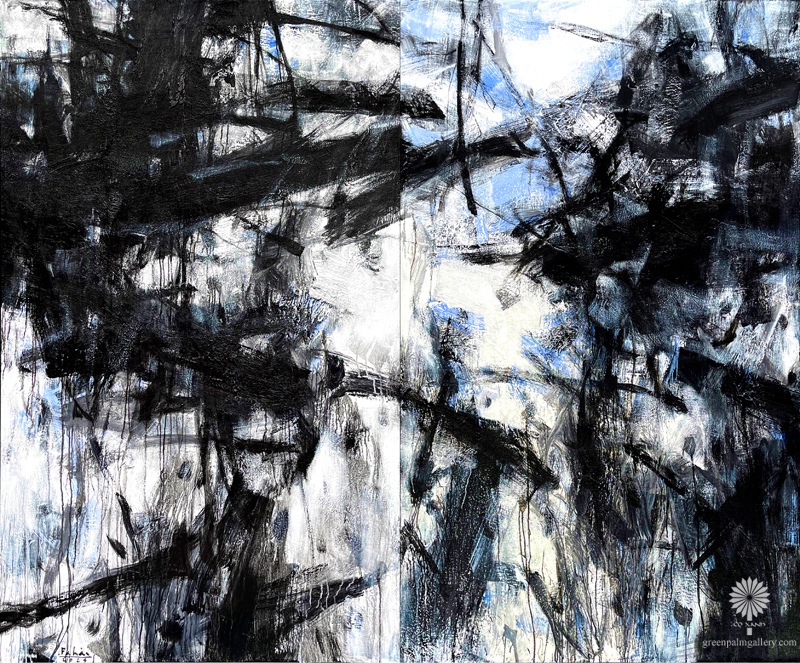
A New Day by Pham An Hai impresses with its dramatic black strokes against a restrained background.
Self-portrait – Nghiem Vu Bang
“Self-portrait” by Nghiem Vu Bang, sized 100 × 80 cm, blends cubist structure with expressive sensibility. The depiction of the artist at his easel is fractured into geometric facets, uniting various viewpoints on a single plane and producing a composition rich in movement and visual identity.
Defined black outlines pair with vibrant green, orange, and pink, creating sharp contrasts and remarkable depth. Rather than a realistic likeness, Nghiem Vu Bang focuses on color and form to reveal his artistic vision and individual voice.
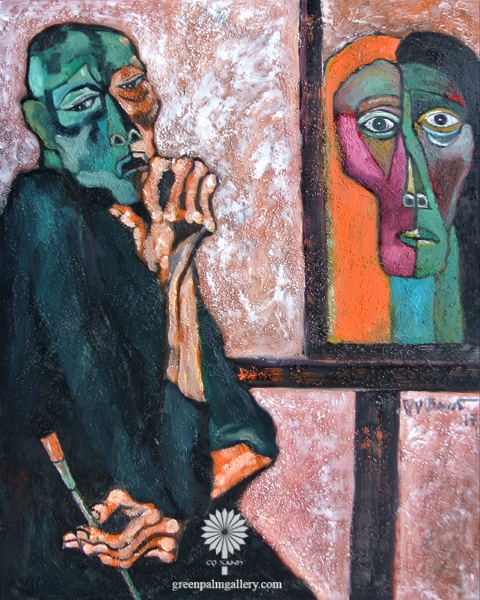
Self-portrait by Nghiem Vu Bang fuses cubist geometry with lively, contrasting color.
Frequently asked questions about abstract oil painting
Abstract oil paintings employ a distinctive visual language compared to traditional genres, which raises questions when it comes to selection and display. Here are answers to some of the most common queries:
Is abstract painting difficult to choose and hang?
Abstract oil painting is not challenging to select if you consider your interior style, available space, and dominant color palette. Pieces with harmonious layout and colors are generally easy to pair with a variety of designs, from contemporary and minimalist to industrial or neoclassical. When hanging artwork, balance the painting’s size with your wall area to ensure a cohesive look.
How is the price of abstract oil painting determined?
Pricing depends on factors such as size, materials, the artist’s reputation, and the work’s artistic value. Decorative pieces often start at a few hundred dollars, while works by renowned artists or collectible pieces can fetch thousands or even hundreds of thousands.
How best to care for abstract oil paintings?
Display paintings in dry areas, away from direct sunlight and high humidity. Clean the surface regularly with a soft cloth or designated brush to remove dust without disturbing the paint. Avoid impacts or excessive handling to preserve the artwork’s vibrancy and texture over time.
With a language rooted in creativity, abstract oil painting holds a unique place in contemporary art. Its aesthetic appeal, movement diversity, and versatility in interior design ensure that every piece delivers a personal visual and emotional experience, leaving a lasting impression in any living environment.
|
GREEN PALM GALLERY Gallery in Ha Noi: 39 Hang Gai, Ha Noi, Viet Nam
Gallery in HCM City: 49 Mac Thi Buoi, HCM City, Viet Nam
|